

Related Topics
The General Project Information
The Statistics
According to Food and Agriculture Organization (FAO) statistics, Egypt ranks seventh globally in aquaculture and first in Africa in fish production. Fish imports amount to approximately 236,000 tons, representing 16% of total production.
The Project Area
The project spans an area of 4,000 feddans and includes a massive fish farm dedicated to producing various fish species.
The primary fish species farmed at the mega-scale Ghalyoun project include:
Tilapia
Sea bass
Shrimp
Kafr El-Sheikh Governorate is considered the capital of Egypt's fisheries sector for the following reasons
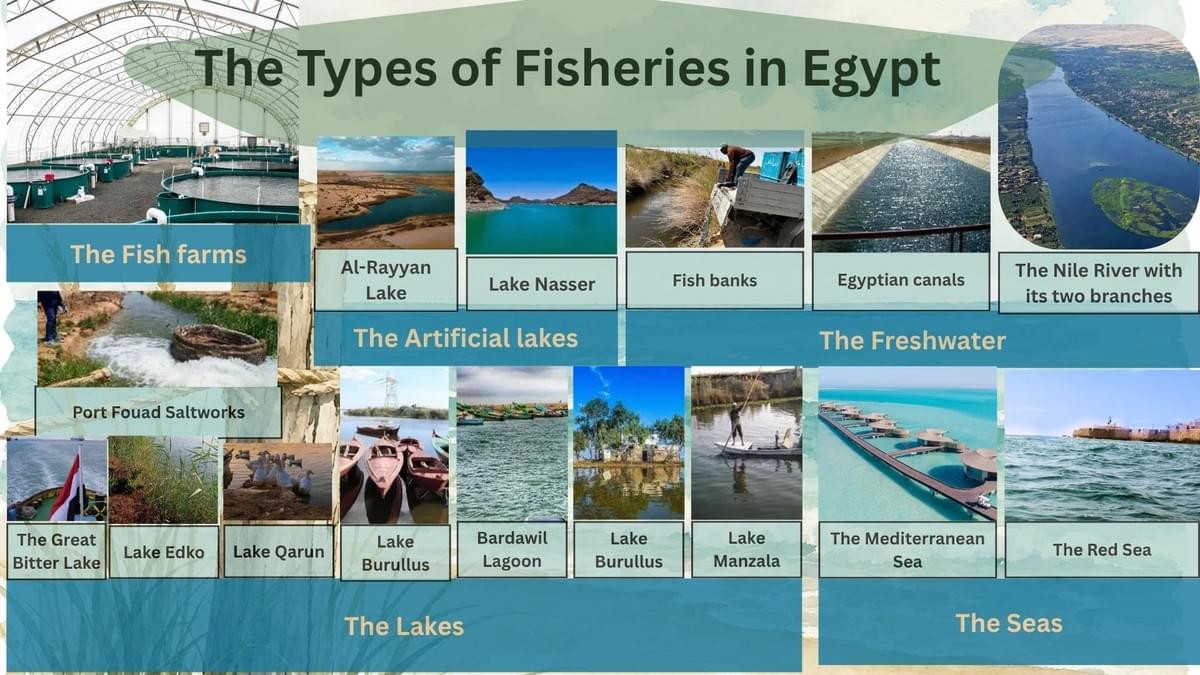
1- It is home to Lake Burullus—Egypt's second-largest natural lake—which spans 108,000 feddans and serves as a major fishing hub.
2- The governorate accounts for over 40% of Egypt's total fish production.
3- Its strategic geographical location.
4- Thanks to advanced aquaculture projects, the governorate has achieved a significant boom in this sector in recent years.
5- It hosts pioneering aquaculture initiatives, such as the mega-scale Ghalyoun project—the largest aquaculture project in the Middle East.
6- It features private fish farms covering approximately 80,000 feddans, which contribute significantly to increased production.
7- It houses an advanced fish feed plant to supply the necessary feed for the fish.
8- It contains research units dedicated to studying and developing aquaculture technologies.
The Distinctive Environmental Characteristics of the Ghalyoun Pond
It's located in the Kafr El-Sheikh Governorate of Egypt, the Ghalyoun Pond is a saline coastal lagoon that forms part of the Ras El-Bar Nature Reserve. It possesses unique characteristics that make it suitable for aquaculture, including:
**The Area**
The pond covers an area of approximately 20 square kilometers, making it one of the largest coastal lagoons in Egypt.
**The Depth**
The depth ranges from 1 to 3 meters, which is suitable for most farmed fish species.
**The Salinity**
The water salinity ranges between 20 and 40 parts per thousand (ppt). This moderate salinity level supports the growth of various fish and crustacean species. Salinity levels are influenced by rainfall, tides, and freshwater discharge from surrounding agricultural areas.
**The Temperature**
Water temperatures range from 15°C to 30°C throughout the year, a suitable range for most fish species farmed in temperate climates.
**The Soil**
The pond bed consists of sandy-clay soil rich in organic matter, providing an ideal environment for the growth of phytoplankton and zooplankton, which serve as the primary food source for fish.
**The Nutrient Supply**
The pond receives water from the Mediterranean Sea through narrow inlets, facilitating water renewal and supplying essential nutrients for aquatic organisms. It also receives freshwater from surrounding agricultural areas, which helps regulate salinity levels.
The challenges Facing the Fisheries Sector in Kafr El-Sheikh
Despite a significant surge in production, the sector faces several obstacles, most notably:
1. The pollution in Lake Burullus
The agricultural and industrial runoff degrades water quality, impacting fish health and production.
2. The encroachment on the Lake
Widespread encroachment and overfishing negatively affect fish stocks.
3. The High Feed Costs
The high price of fish feed is a major challenge for private fish farms.
4. The Climate Change
Fluctuations in temperature and water levels affect fish growth and productivity.
5. The significantly Increased Production Costs
The particularly electricity costs.
The State Efforts to Develop the Sector
The Egyptian government has taken several steps to support the fisheries sector in Kafr El-Sheikh, including:
The Developing Lake Burullus
By removing encroachments and clearing the lake of weeds and pollutants
Providing low-interest loans
To small-scale fishermen and fish farm owners
The supporting fish farming
By providing fish fry at affordable prices
Establishing local feed factories
To curb rising prices
The key technologies employed in the Ghalion fish production project:
The intensive and semi-intensive aquaculture
To maximize productivity per unit area while controlling rearing conditions.
The advanced hatcheries for high-quality fry production
(fish and shrimp juveniles) under strictly controlled environmental conditions.
The fry nursing and rearing units
Used prior to transfer to grow-out ponds, thereby enhancing survival and growth rates.
The water treatment and purification systems
Applied before and after use to protect the environment and improve water quality within the farm.
The pond lining with high-density polyethylene (HDPE)
To prevent water seepage and improve operational efficiency.
The specialized feed mills
Producing high-quality feed tailored to the specific needs of various fish and shrimp species.
The processing, packaging, and wrapping facilities
The utilizing modern standards to enhance value-added and prepare products for export.
The research and Development (R&D) center
Dedicated to studying and improving aquaculture techniques, developing strains, and boosting production efficiency, ensuring management and operations are grounded in international expertise and modern technology across rearing, production, and processing sectors.
The intensive Floating-Cage Farming
This is the most common method for farming sea bream and meagre at the Ghalyoun project. Fish are kept in floating cages made of plastic or metal and fed high-quality artificial feed. This method is characterized by high productivity and ease of management and monitoring.
Semi-Intensive Earthen Pond Farming
This method is used to raise mullet and shrimp at the Ghalyoun project. Earthen ponds of various sizes are excavated, filled with saltwater, and stocked with natural plankton. This method is characterized by low costs and reduced reliance on artificial feed.
The Integrated Aquaculture
This system aims to combine fish farming with the cultivation of other aquatic organisms—such as crustaceans and algae—to increase production, improve water quality, and reduce pollution. Experimental models for integrated aquaculture are currently being developed at the Ghalioun Pond facility.
It's improving Water Quality in Lake Burullus
Through ongoing remediation and cleanup plans, such as...
The key modern techniques and measures used or proposed to improve water quality in Lake Burullus include:
a. Dredging: Deepening the lake.
b. Removing accumulated bottom sediments and silt using specialized dredgers.
c. Improving water circulation, increasing depth, and reducing stagnant zones where water quality deteriorates.
d. Opening and clearing inlets (*boghaz*)—the channels connecting the lake to the Mediterranean Sea—and studying the creation of a new inlet or additional opening to enhance water circulation and quality.
e. Working to improve the flow of saline and fresh water and ensuring continuous water renewal within the lake.
f. Removing aquatic vegetation, reeds, and rushes.
g. Using specialized mechanical equipment to remove accumulated vegetation that depletes oxygen and obstructs water flow, thereby helping to reduce organic pollution and improve the habitat for fish.
h. Improving wastewater management.
i. Expanding wastewater treatment projects and facilities prior to discharge into the lake.
j. Reducing organic pollutants and nutrients that trigger harmful algal blooms.
k. Environmental monitoring and water quality analysis: conducting periodic measurements of dissolved oxygen, salinity, pH levels, and organic matter.
l. Utilizing data for lake management and making rapid decisions to address any deterioration in water quality.
m. Employing Geographic Information Systems (GIS) and remote sensing.
n. Monitoring changes in the water body and identifying areas of sedimentation, aquatic vegetation, and pollution.
The Periodic Veterinary Inspections
The Periodic veterinary checks are conducted on the fish to detect any diseases or injuries. Affected fish are isolated and treated with antibiotics and appropriate medications.
The Feed Monitoring
The commercial feeds used in fish farming are inspected to ensure high quality and the absence of toxins or harmful substances.
The Implementation of the HACCP System
This system aims to ensure the safety of fish products and minimize the risk of contamination by bacteria, viruses, and parasites.
The Fostering Cooperation with Traditional Fishermen
A dialogue is established between the fish farming project and traditional fishermen to reach mutually beneficial solutions that safeguard the rights of all parties and contribute to the sustainability of natural resources.
The Promoting Ecotourism
The Ghalioun Pond has become an attractive destination for visitors from around the world, thanks to its natural beauty and diverse aquatic life.
The Supporting to the Fishermen
It's building on the success of the Ghalioun fish farming project and the development of the fishing sector in Lake Burullus, a range of modern training programs can be directed at fishermen, most notably:
The Sustainable fishing programs
Understanding authorized fishing seasons
The compliance with fishing regulations
Curbing the catch of fish fry and undersized fish
Preserving the lake's biodiversity
Programs on using modern fishing technologies
Operating GPS devices
Using fish-finding equipment (fish finders)
Weather and marine navigation apps
Using smartphones to monitor markets and access technical guidance
Post-harvest fish quality improvement programs, such as:
Proper fish handling
Using ice and refrigeration during transport
Sorting, packaging, and storage methods
Reducing waste and enhancing market quality
The benefits of fish farming at the mega Ghalioun project in Kafr El-Sheikh:
It's contributes to achieving high production rates
Provides high-quality fresh fish at affordable prices
Increases market supply, thereby supporting price stability
Creates new job opportunities for the governorate's youth
