

A group of shrubs and trees that grow in wetlands, forming dense forests along tidal estuaries, salt marshes, and saline or brackish mudflats.
What characterizes these trees?
They are distinguished by their exposed prop roots. The term "mangrove" also refers to the forests formed by these plants. Respiratory roots (aerial roots) are a hallmark of many species; they protrude above the mud and contain small openings—lenticels—through which air enters, passing via soft, spongy tissue down to the roots buried in the mud. These trees are vital to the health and functioning of tropical and subtropical coastal ecosystems worldwide.
The mangrove trees are able to survive in conditions that would kill most other plants.
They serve as nursery habitats for countless marine organisms.
The Types of Mangrove Trees
There are four main types of mangrove trees, each possessing unique characteristics and adaptations that enable them to thrive in coastal environments.
The Red Mangroves (*Rhizophora* spp.)
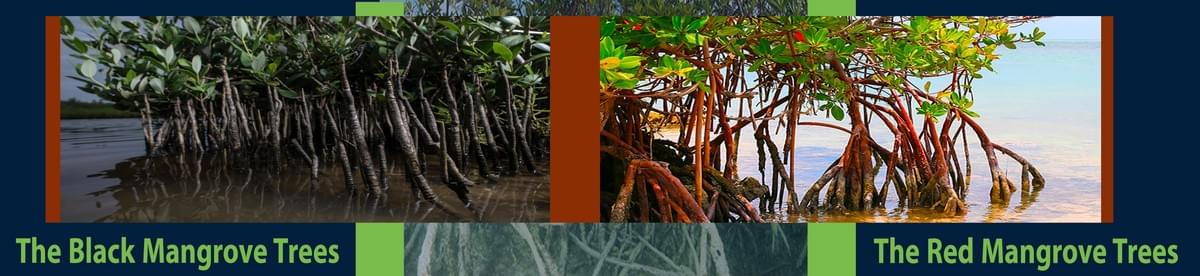
The red mangroves (*Rhizophora* spp.) are among the most well-known and ecologically significant mangrove species. These remarkable plants are found in tropical coastal ecosystems worldwide, ranging from the Caribbean to Southeast Asia. A distinctive feature of red mangroves is their unique root system, which includes aerial roots—specifically pneumatophores—long, pillar-like structures that protrude above the water's surface, allowing oxygen to reach the roots. This adaptation enables them to survive in waterlogged environments where other plants would quickly suffocate. Additionally, these trees possess strong prop roots that support the weight of their extensive root systems. Red mangroves play a vital role in stabilizing shorelines, protecting against storms and erosion, and providing habitat for a diverse array of marine life. Their importance extends beyond coastal protection; they also contribute to maintaining water quality by filtering out pollutants and sediments.
The Black Mangroves (*Avicennia* spp.)
The black mangroves (*Avicennia* spp.) are among the most widespread and adaptable mangrove species. These remarkable plants thrive in diverse coastal environments—ranging from muddy estuaries to sandy beaches—and are found in tropical and subtropical regions worldwide. A standout feature of black mangroves is their unique ability to excrete excess salt through specialized glands on their leaves. This adaptation enables them to survive in areas where fresh water is scarce or nonexistent. In fact, black mangroves are estimated to derive up to 60% of their water needs from seawater, making them among the most resilient plants on Earth. When growing in high-salinity environments, they develop specialized roots known as respiratory roots (or pneumatophores), which allow for respiration and gas exchange above the water's surface. This unique trait enables them to flourish in environments where other plant species might quickly succumb to salt-induced stress. By studying the extraordinary adaptations of black mangroves, we gain valuable insights into their ability to survive and thrive within challenging coastal ecosystems.
The Mangrove Leaf and Stem Structure
The mangrove trees have evolved unique leaf and stem structures that enable them to thrive in harsh coastal environments. One of their most notable features is their supporting roots, which emerge from the base of the trunk and extend into the water. These roots allow the mangrove trees to:
1- Anchor themselves firmly in place
2- Withstand strong tidal currents
3- Prevent soil erosion
4- Exchange gases through specially adapted leaves
Their leaves feature a network of tiny, hair-like projections known as stomata, which allow for the efficient absorption of oxygen from the air. This is crucial for mangroves, as they often grow in areas with low levels of dissolved oxygen. In fact, some mangrove species can survive in oxygen levels up to 90% lower than those required by other trees.
As for mangrove stems,
They possess unique characteristics, featuring a thick, sturdy trunk that supports a substantial above-ground biomass. This enables mangrove trees to grow into dense forests, providing a vital habitat for countless marine organisms. By understanding these unique adaptations, we can better appreciate the resilience and diversity of mangrove ecosystems.
The geographic Range, Habitats, and Climatic Requirements
Mangrove forests are found in tropical and subtropical coastal regions worldwide, with significant concentrations of mangrove species in Southeast Asia, Africa, and Central and South A
merica.
The Climatic Requirements
Ther mangrove trees have adapted to survive in areas characterized by high salinity and frequent flooding.
They can withstand a wide range of temperature fluctuations, from 4°C to 32°C.
The Medicinal Properties of Mangrove Trees
For centuries, mangrove trees have been an integral part of the lives of many communities; they provide not only food but also medicinal benefits and cultural significance in many coastal regions.
It is used for the following:
1- Mangrove wood is used in the construction of houses, bridges, and other structures due to its unique resistance to saltwater and insects. The wood products industry is a major consumer of mangrove timber, as many countries rely on these trees for construction materials, furniture, and paper production.
2- It is known for its antiseptic, anti-inflammatory, and antimicrobial properties.
For instance, mangrove bark is used to treat skin conditions such as eczema and acne.
3- The angrove sap is used for
to treat wounds and alleviate inflammation.
4- It serves as a primary source of charcoal.
The charcoal industry relies heavily on mangrove trees, and many communities use them as a main source of firewood. While charcoal is essential for cooking and heating in some regions, however...
**The Environmental Importance**
**1- The Importance of Mangroves in Coastal Ecosystems**
Mangroves are often referred to as the unsung heroes of coastal ecosystems. These unique trees play a vital role in maintaining the delicate balance of marine life and supporting local communities. Serving as nursery habitats, mangroves provide a safe haven for countless species of fish, crustaceans, and other marine animals to grow and develop before migrating to the open ocean.
**2- Resilience Against Storms and Erosion**
The extensive root networks anchoring mangroves in place act as a natural barrier, protecting shorelines from damage caused by rough waves and tidal fluctuations. In fact, studies have shown that mangroves can reduce wave energy by up to 90%, thereby shielding neighboring communities from the impacts of extreme weather events.
**3- Supporting Local Communities**
Mangroves support sustainable livelihoods such as fishing, tourism, and forestry. By conserving and rehabilitating mangrove forests, we not only protect these vital ecosystems but also contribute to the well-being of the populations that rely on them for food, income, and shelter.
**The Global Threats and Challenges**
The mangroves are among the most valuable ecosystems on our planet. Despite their importance, these remarkable trees continue to face threats from human activities.
1- The deforestation is a major concern for mangrove forests
with estimates indicating a 35% loss worldwide since the 1980s. The damage caused by deforestation extends beyond the environment to affect local communities that rely on these ecosystems for their livelihoods.
2- The unsustainable harvesting practices threaten
The long-term sustainability of mangrove forests. To ensure the continued health of these ecosystems, it is essential to adopt sustainable methods for harvesting mangrove products. This includes harvesting only during specific seasons, taking only necessary quantities, and replanting trees to maintain the forest's integrity.
3- The pollution poses another serious threat to mangroves,
As industrial waste and agricultural runoff contaminate their waters. For instance, on the Indonesian island of Java, pollution from nearby industries has led to a 50% decline in mangrove cover over the past few decades. Additionally, coastal urban development—such as the construction of hotels and resorts—fragments mangrove habitats.
The international efforts to protect mangrove trees include the following key milestones:
1- The establishment of the Mangrove Ecosystems Programme
by the International Union for Conservation of Nature (IUCN) in the 1970s.
2- The signing of the Ramsar Convention on Wetlands in 1993
This global convention recognized the importance of wetland ecosystems—including mangroves—and encouraged nations to conserve and protect these areas.
4- The mangroves require planting near streams and rivers
Mangrove trees tolerate only limited fluctuations between fresh and salt water, making areas with extreme tidal ranges unsuitable for their growth. Consequently, mangrove forests are often found in estuaries, bays, and sheltered deltas where water levels remain relatively stable. For instance, in the Sundarbans mangrove forests—located in the Ganges-Brahmaputra Delta—freshwater flows from nearby rivers and streams into the tidal flats, supporting immense biodiversity.
5- The environmental conservation organizations, such as the World Wide Fund for Nature (WWF)
The work alongside local communities to restore degraded mangrove areas through reforestation and habitat restoration projects.
6 - The sustainable tourism initiatives can
It support environmental conservation efforts while providing economic benefits to local communities. By supporting organizations that prioritize the protection of mangrove trees, you contribute to safeguarding these vital ecosystems and the immense benefits they provide.
7 - The rising sea levels are among the most pressing
The challenges facing mangrove ecosystems. As the frequency of tides and storms increases, mangrove trees struggle to adapt to changing conditions. In fact, a study by the Intergovernmental Panel on Climate Change (IPCC) found that sea levels are projected to rise by 26 cm by 2050, threatening the lives of millions of people living in coastal areas.
8- The increasing frequency of storms poses a major threat to these fragile forests.
As global temperatures continue to rise, mangrove trees are facing immense stress.
The mangrove trees also require at least 30 cm of rainfall annually to sustain their growth...
